
How to keep layered necklaces from tangling while wearing them
Start with two necklaces, separate where they sit, and try different chain textures. This checklist helps you work out which pairing keeps twisting, when a layering clasp may help, and when to wear the chains separately.
By SIAFRA
To reduce tangling while wearing layered necklaces, start with two chains that sit at visibly different lengths and try different chain textures. If they keep crossing at the back, a compatible layering clasp may help. No arrangement can promise that moving chains will never twist.
This is about necklaces crossing while they are on your neck. If they come out of the jewelry box already knotted, skip to the storage check below. Those are different problems, even when they leave you with the same knot.
1. Find the pair that causes the problem
Take off the stack and lay each necklace separately on a soft, clear surface. Check for an existing knot or a clasp caught through another link. Do not pull the chains apart while they are around your neck.
Put on just two untangled necklaces. Try them during your usual movements, then add a third only if the pair works for you. This gives you a way to identify a troublesome combination rather than changing every chain at once.
2. Separate where the necklaces sit
Look in a mirror with both necklaces on. If the chains and pendants sit on top of each other, use an existing adjustment loop or a suitable extender to give them a visible gap. Blue Nile's layering guidance recommends varying chain lengths and textures to reduce tangling.
For example, a 16-inch chain and an 18-inch chain are a starting combination to try, not a universal fit rule. Neck size, pendant length and your neckline change where they actually land. Choose the gap by looking at the necklaces on you, not only at the numbers on their listings.
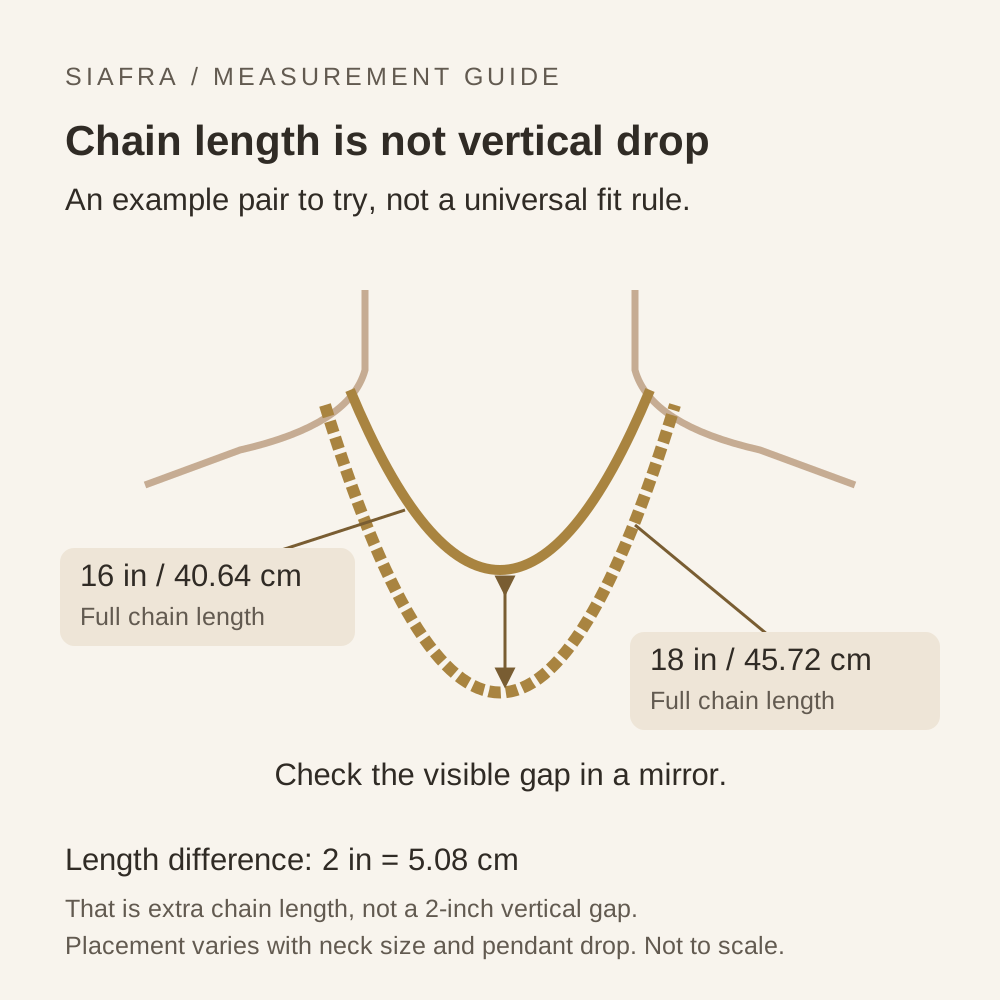
Example chain lengths: 16 in (40.64 cm) and 18 in (45.72 cm). The difference is 2 in of chain, not a 2 in vertical gap. Actual placement varies.
3. Change one chain texture
If separating the lengths does not help enough, try a different chain style for one layer. Blue Nile also suggests varying chain thickness. Start with jewelry you already own, keeping the lengths distinct, and compare the result during ordinary wear.
| What you notice | One change to try |
|---|---|
| Both pendants land together | Lengthen one layer with a compatible extender or choose a different chain length. |
| Similar fine chains keep crossing | Swap one for a different texture or thickness while keeping a visible length gap. |
| Two layers work, but three become a knot | Return to the working pair; a third layer is optional. |
| Clasps and chains cross at the back | Check whether a layering clasp fits the closures, then try it with two chains first. |
| The necklaces are tangled before you put them on | Separate their storage and deal with the existing knot before wearing. |
4. Check whether a layering clasp suits your necklaces
A layering clasp, sometimes called a necklace separator, provides separate attachment points for multiple chains. Shoppers discussing necklaces that tangle during wear mention these devices as something to try. That is a useful lead, not evidence that every separator works with every stack.
- Check that each necklace's clasp and end ring can attach securely to the separator.
- Check the separator's material if you have known metal sensitivities.
- Allow for the length the extra hardware adds, then look at the spacing again.
- Check comfort at the back of your neck, including whether the hardware catches your hair.
A separator organizes the attachment points; it does not hold the fronts of the chains still. If your necklaces continue twisting together, wearing that pair separately is a reasonable result. Do not keep buying accessories to rescue a combination you find uncomfortable.
5. Keep the working stack separate in storage
Take off each necklace individually and give it its own storage space. Jewelers Mutual recommends individual storage options, including necklace hooks, original packaging that holds the chain in place, and protective organizers.
If you find a tight knot, lay the necklace flat in good light and avoid pulling the chain taut. Stop if you cannot loosen it without force, particularly with a fine or damaged chain. A jeweler can assess a knot that is not coming apart; oils and household cleaning hacks are not appropriate for every finish or pendant material.
Before buying another necklace for layering
- Confirm the full chain length and the usable adjustment range.
- Compare the pendant drop as well as the chain length with your current necklace.
- Check the chain style, thickness, closure and material details.
- Ask about any missing measurements instead of inferring them from a styled photograph.
If a second necklace keeps becoming work, keep one necklace and add earrings or a cuff instead. The cuff-fit guide covers the measurements and movement checks to make before choosing one.
More from the journal