
Earrings keep irritating your ears? What to check before buying another pair
Before buying another pair for sensitive ears, check the metal in the posts and backs, the exact material grade, and the evidence behind the seller's claims. A reassuring label alone cannot tell you what is causing the irritation.
By SIAFRA
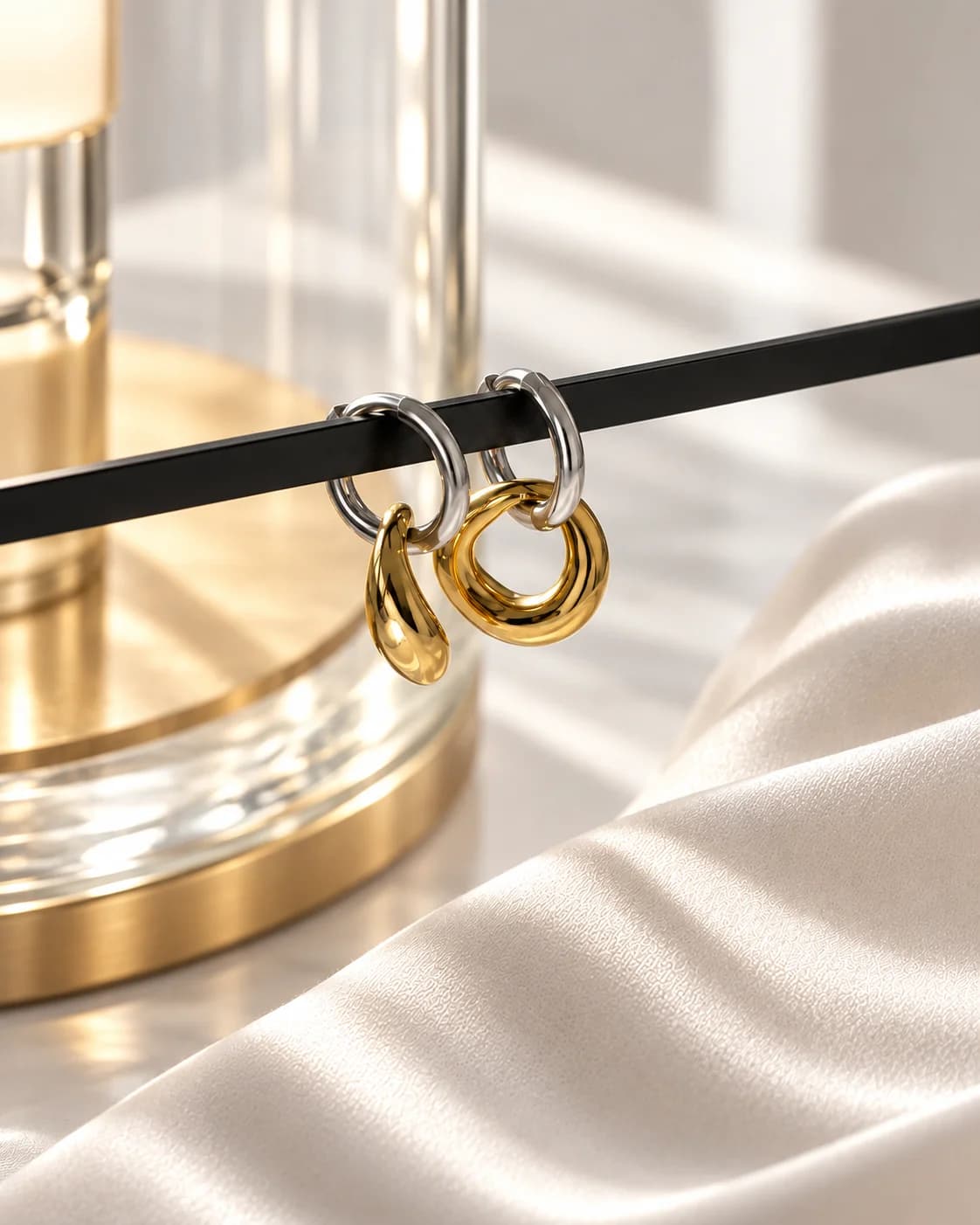
The word you may be looking for is hypoallergenic. But before buying another pair, ask what the posts and backs are made from and what documentation supports the claim. The label is not an exact metal grade or a personal guarantee.
This guide starts with a real shopper's question: earrings keep irritating their ears, and they want to know what wording to look for. The practical task is to replace vague reassurance with information you can check.
1. Check whether you need care before another purchase
Recurring itching does not identify the cause on its own. Nickel and cobalt can cause jewelry allergy, while friction, trapped soap and dirt can also irritate skin. DermNet explains these different reactions.
If the piercing is hot, swollen, very painful, producing pus, or you feel unwell, seek urgent medical help for a possible infection. Leave the jewelry in unless a doctor tells you to remove it. These are NHS recommendations for suspected infected piercings, not a situation to troubleshoot by trying new earrings.
2. Find the metal in the posts and backs
Read beyond the color or the decorative hoop. A listing that describes the front as gold does not answer what passes through the piercing or sits against the back of the ear. Ask for those components separately.
- Post or ear wire: what is the exact metal and grade?
- Back or closure: is it the same material, or a different alloy?
- Finish: is the stated gold solid metal or a coating over another base?
- Documentation: which components does the material certificate or test report actually cover?
3. Ask for a specification behind the label
The Association of Professional Piercers' guidance for initial piercings names specific materials and standards. It identifies titanium as an option for nickel sensitivity concerns, including ASTM F136 implant-certified titanium and ASTM F67 commercially pure titanium. Ask for supporting documentation rather than relying on the word titanium alone.
| Listing says | Ask the seller |
|---|---|
| Hypoallergenic | What exact material are the posts and backs, and what supports that description? |
| Surgical steel | Which alloy and documented standard? The APP distinguishes specific steel grades. |
| Titanium | Which grade and ASTM or ISO specification? Is documentation available? |
| Gold | Solid or coated? What is the karat and alloy composition? |
For fresh piercings, the APP describes gold of at least 14K only when the alloy is nickel- and cadmium-free and biocompatible; it excludes gold-plated, gold-filled and vermeil jewelry. It also stresses appropriate fit and a smooth surface. A qualified piercer should select jewelry for a healing piercing.
4. Send this before you buy
I have had irritation from earrings before. Can you confirm the exact material and grade of the posts and backs, whether either is coated, and share the relevant material documentation or test report? If there is a report, does it cover this model and those components?
If the reply repeats only the original label, the material question is still unanswered. Keep the written details so you have something useful to compare with pairs you already tolerate.
5. If it keeps happening, identify the cause
A dermatologist can assess recurring reactions and may recommend patch testing to identify an allergy. The American Academy of Dermatology explains the diagnostic process. That can give you a specific substance to avoid instead of another round of trial purchases.
What this means when shopping SIAFRA
Check the individual product details and our specifications and testing status. A nickel-release result is not the same claim as nickel-free composition, and it does not guarantee that every wearer will tolerate a piece. Our specifications list separate ear-post assessment and testing after simulated wear as work still to be completed. The guide to what jewelry lab tests mean explains why the scope of a report matters.
More from the journal