
How to check whether a cuff bracelet fits your wrist
A cuff should feel secure when you turn your wrist without pinching or needing a watch to hold it in place. Measure your wrist, check the cuff's inner dimensions and opening, then try these simple movement checks.
By SIAFRA
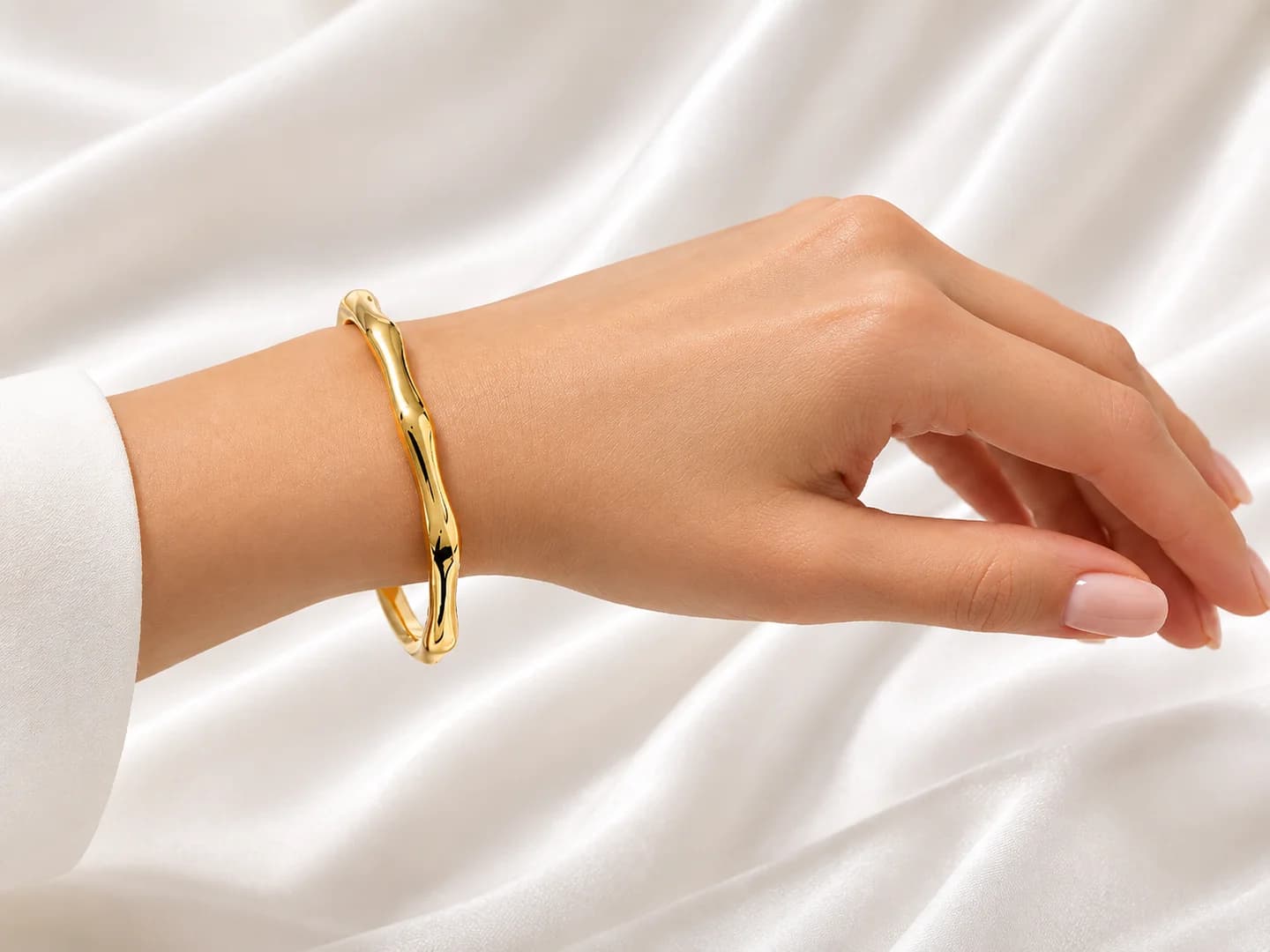
A cuff bracelet fits when it stays on during ordinary wrist movement and feels comfortable without squeezing. Wrist circumference is a starting point: the cuff's shape, internal width and depth, and the gap between its ends also matter.
If a cuff looks right with your arm still but starts slipping off when you turn your hand, the fit has not passed the useful test. A watch in front of it can hide that problem. Check the cuff on its own first.
1. Measure where you will actually wear it
- Wrap a flexible tape around the part of your wrist where the cuff will sit. Keep it against the skin without pulling it tight.
- If you use a strip of paper or non-stretch string, mark where the ends meet, then lay it flat against a ruler.
- Write down the circumference in millimeters or centimeters. Measure again to check the result.
- Compare with the size guidance for that exact cuff. A small or medium from another brand is not a reliable conversion.
David Yurman's bracelet sizing guide likewise starts with a wrist measurement and distinguishes the fit of different bracelet styles. Use a maker's chart for its own pieces rather than applying it to every cuff.
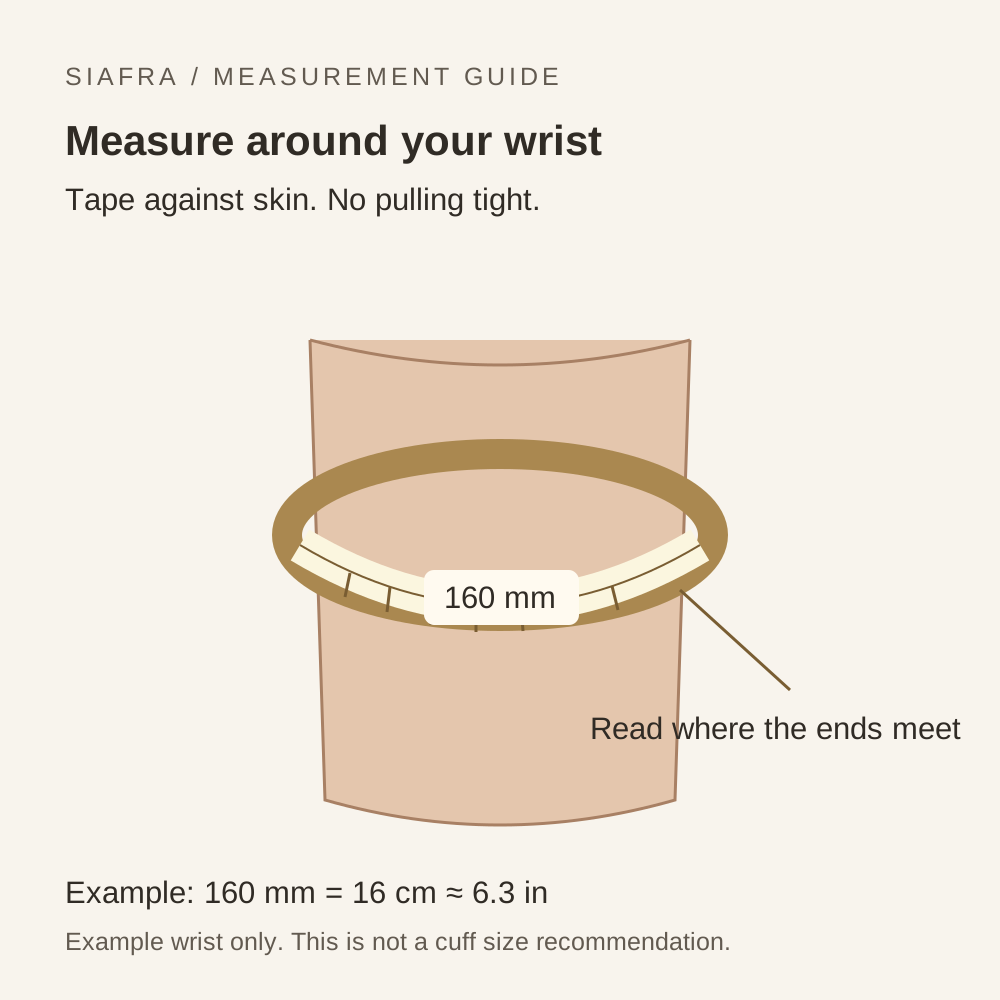
Measure where you plan to wear the cuff. The 160 mm wrist shown is an example, not a fit recommendation.
2. Check four measurements on the product page
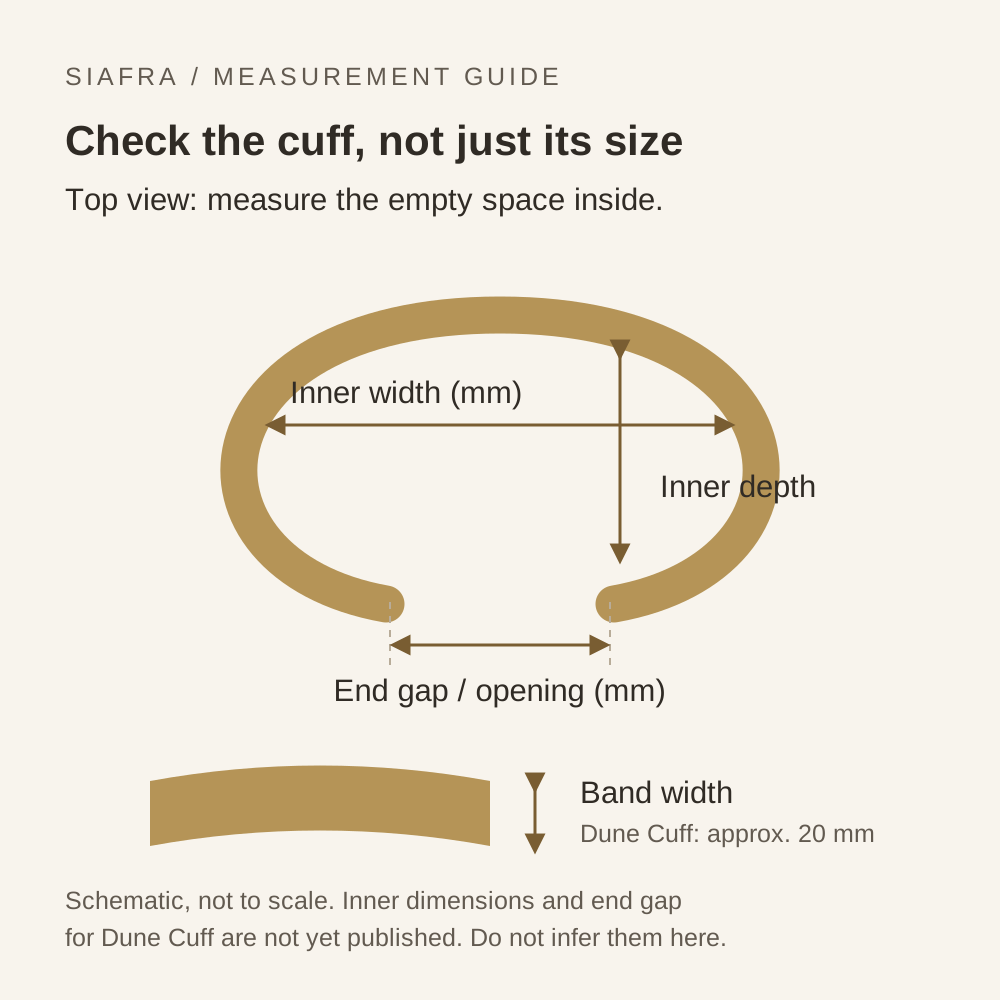
Measure inside the cuff, then the opening between its ends. Dune Cuff's approximately 20 mm band width is a separate measurement; its inner dimensions and opening are not yet published.
| Measurement | What it helps you check |
|---|---|
| Inner width and depth | The space inside the cuff. An oval and a round cuff can sit differently even when their widest measurement matches. |
| Opening size | The gap between the ends. Ask how the design is intended to go onto your wrist. |
| Band width | How much of your forearm the cuff covers. This is different from the internal space for your wrist. |
| Recommended wrist range | The maker's fit guidance for this particular model, if confirmed. |
If you already own a comfortable cuff, measure its inside width, inside depth and end gap to use as a comparison. Do not turn one diameter into a wrist circumference with a circle formula: an open, oval cuff is not a closed circular bracelet.
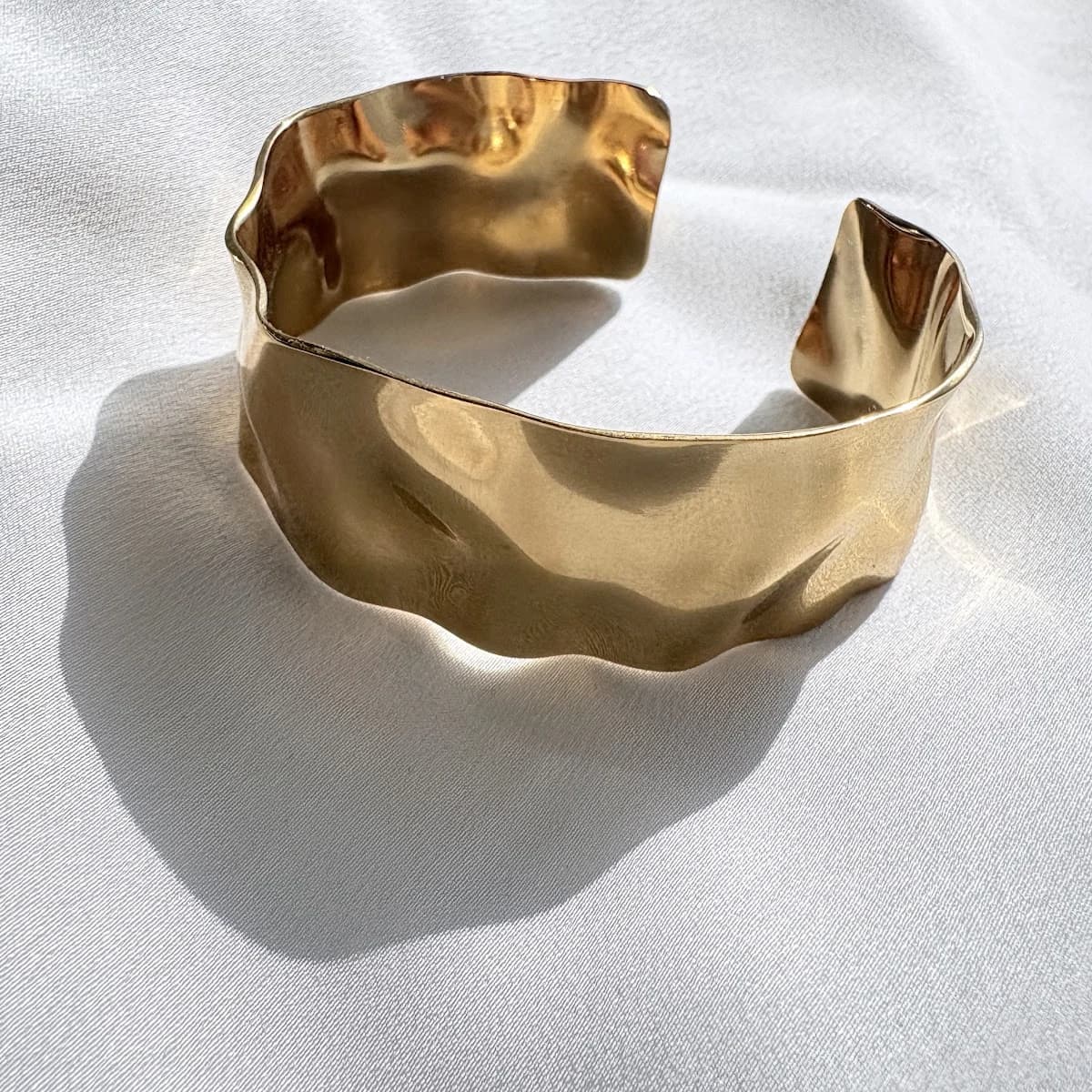
The band width and the end gap answer different fit questions. A photograph does not supply their measurements.
3. Put it on without forcing the opening
Follow the seller's instructions for the design. Many open cuffs go onto the side of the wrist rather than over the whole hand. If it will not go on comfortably, stop and ask for fitting help. Do not assume that an open back means the metal is adjustable.
4. Try the movement check over a soft surface
- Try the cuff alone, over a bed or folded towel, so a slipping bracelet has a soft landing.
- With your arm relaxed, turn your palm up and down slowly. Check whether the opening starts to pass around the side of your wrist.
- Bend your wrist gently as you would when typing or reaching for a cup. Notice whether the ends dig in or the band presses into your hand.
- Try your usual sleeve over it. A cuff that catches or gets pushed into an uncomfortable position may not suit that outfit or placement.
5. Decide whether to keep, exchange or ask for help
| What happens | What to do next |
|---|---|
| It starts slipping off as the wrist turns | Stop wearing it until the seller checks the size and opening. A different size or shape may be needed. |
| The ends pinch or the band restricts movement | Remove it and ask about a different fit. Snug should not mean painful. |
| It rotates a little but stays secure and comfortable | Some movement may suit you. Judge comfort and security rather than requiring the cuff to stay completely still. |
| It only stays on behind a watch | Repeat the test without the watch; the cuff itself may not fit securely. |
Do not squeeze or pull the ends to solve a fit problem unless the maker explicitly permits adjustment for that model. David Yurman's guide notes that cuffs and bangles are generally designed to be worn as supplied, with resizing eligibility checked individually.
What to ask before ordering a SIAFRA cuff
My wrist measures ___ mm where I want to wear the cuff. Can you confirm this model's inner width, inner depth, opening size and recommended wrist range? Is this specific cuff designed to be adjusted?
For Dune Cuff, the published 20 mm measurement is the band width. It does not establish the wrist size it fits. Check the current product details and returns policy before ordering if the remaining measurements are not available.
More from the journal